當初 QR code 的發明人可能萬萬沒想到,QR code 是如何滲透到我們現今日常生活中的每個角落。
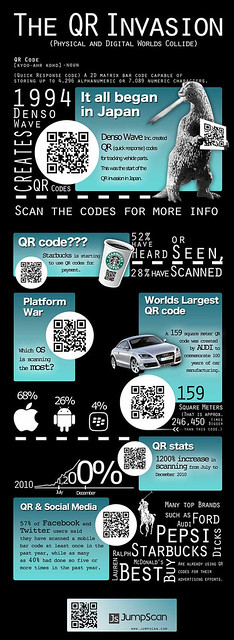
據行動計算公司統計,QR code 於 2011 年底在所有雜誌廣告的滲透率是 8.4%,而這數字在 2011 年初僅有 3.6%,之間成長足足 233%。然而這樣的結果不見得是消費者所樂見。事實上 QR code 在今日生活中的廣告行銷應用已經太普及,甚至氾濫到另消費者反感的程度;如同美國《商業週刊》一位受訪者表示,這些 QR code 總是把他導到品牌的網站:「約有 80% 的時間,我都後悔我掃描了 QR code」。
由於 QR code 最終往往流於連結用戶與某企業品牌的廣告行為,而非真正提供用戶有用資訊,加之要能掃描 QR code,用戶需持有已安裝掃描 QR code app 的智慧型手機,而條碼本身也需要有一定的清晰度,種種原因終於導致消費者越來越不願意花時間掃描 QR code。例如美國知名行銷研究公司即指出,在去年五月至六月之間,就僅有 5% 的美國人花時間掃描了 QR code。如此結果也讓許多把大筆行銷經費撒在 QR code 的廣告主開始熱情降溫:無論是法國傳媒巨頭陽獅集團(Publicis Groupe)或是英國廣告公司 WPP 均推估或指出,僅有不到 20% 的廣告主仍願意在 2012 年採用這種新型的二維條碼。Google 也在去年放棄一項寄發 QR code 貼紙給其地方零售商,以作為網路宣傳的計畫。
幸好 QR code 一直都不是只有廣告行銷用途。
QR code 是在 1994 年由豐田集團的子公司 Denso Wave 所研發,作為優化自動機件的存貨追蹤。之後這種資料儲存量與傳統條碼相比多達 100 倍的二維條碼,就一直在全球社會上被大量運用。除了行銷宣傳外,QR code 已經成為許多入場券或電影院票券的必備,甚至還有更多無奇不有的商業用途。例如西雅圖一家賣墓碑的商家即應用這項技術在他們的服務上:用戶必須成功掃描墓碑上的 QR code 之後,才能進入該公司為這些用戶的過世親友所成立的紀念網站。QR code 也常應用在非商業用途上,例如佛州 Sanibel 生態保護區即在園區步道途中設有 QR code,讓掃描的民眾可以得到更多動物的資訊。
最後讓 QR code 支持者最感到振奮的,莫過於 Apple 於今年 WWDC 所宣佈的 Passbook。這項 Apple 的新服務,結合了適地性服務與行動支付;其中許多服務如登機證、折價券及電影票的整合,都將應用上 QR code 的技術。
文章最後,電腦或手機前的各位對 QR code 的氾濫仍是感到厭煩嗎?還是期待更多新奇有趣的應用?
(資料來源:Bloomberg Businessweek;圖片來源:The Daring Librarian, CC Licensed)
QR codes are dense grids of black-and-white boxes, a more sophisticated cousin to the bar code that can hold 100 times more information. The tags can be put to many uses—inventory tracking, event ticketing—but no one has embraced them more visibly than advertisers. They pop up at stores, on posters, and in magazines to deliver coupons or direct shoppers to websites with more product details. QR codes convey “the appearance of being tech savvy,” says Thaddeus Kromelis, a strategist at WPP’s (WPPGY) Blue State Digital, which has done work for Barack Obama’s presidential campaigns. Over the last couple of years they’ve become much more common; in December 2011 they appeared in 8.4 percent of all magazine ads, up from 3.6 percent at the start of the year, according to marketing firm Nellymoser.
That ad trend may be reversing as more consumers, like Hellesen, realize QR codes aren’t always worth the effort it takes to whip out a phone. According to Forrester Research (FORR), only 5 percent of Americans scanned a QR code between May and July of last year, the latest data available. “Advertisers are looking at every way possible that they can connect with consumers,” says Patti Freeman Evans, the analyst who edited the report. “Consumers aren’t saying, ‘Oh, I really want to be able to connect with companies and brands.’”
As a result, advertisers’ “initial enthusiasm has tempered,” says Chia Chen, a senior vice president at the Publicis Group’s Boston-based Digitas. He estimates that 15 percent of his clients still use the codes. At WPP’s Possible Worldwide, less than a fifth of clients have shown any interest in the tags this year, says Anders Rosenquist, the agency’s director of emerging media. Both numbers are down, the firms say. Last year, Google halted a campaign in which it mailed QR-code stickers to retailers that would lead scanners to listings on the search company’s site for local businesses.
QR codes have always had limitations as advertising tools. They can only be used by smartphone owners, who have to download an app and hold their phone steady to capture a clear image. The process doesn’t work well with faraway billboards or in low lighting, and it requires cellular service. For some reason, advertisers have put them on posters found in subways and in United Continental’s Hemispheres In-Flight Magazine, places where travelers usually don’t have reception. Such examples have made QR codes the butt of jokes. A blog called WTF QR Code contains photos of poorly placed codes that no one could reasonably be expected to scan, such as on a billboard along the highway or inside a liquor bottle. Another blog called Pictures of People Scanning QR Codes has garnered hundreds of fans. The site contains no posts.
Engendering brand loyalty was never the intention of the small Tokyo-based team that invented the technology in 1994 at Denso Wave, a subsidiary of Toyota Group. The company created the square codes to improve inventory tracking for auto parts, says Koji Fujiyoshi, an executive there. Denso Wave patented its creation and published the specification online, allowing anyone to use QR codes for free. Some organizations have found creative uses for the technology. A wildlife refuge in Sanibel, Fla., has QR codes situated along its trails to give visitors more information about the animals they see, according to Toni Westland, a ranger there. Rock the Vote is putting codes on T-shirts the organization is giving away at concerts this summer. Scanning them leads to voter registration forms, says Heather Smith, the organization’s president.
To put it charitably, advertisers have been, well, less creative. “Very few people want to visit your corporate website to begin with,” says Kelli Robertson, a director at AKQA, a digital ad agency acquired by WPP on June 20. “Fewer want to do it when they’re out in the world or reading a magazine.”
Even without advertisers, the QR code might thrive. Online ticket site Fandango says about 13 percent of the movie theaters it works with have installed QR-code readers to scan tickets displayed on smartphones. That number is expected to reach 25 percent by the end of the year, says Jessica Yi, Fandango’s product chief. And smartphone ticketing will get a boost from Apple (AAPL) this fall when the next version of its iPhone operating system is released. The new software includes a feature called Passbook, a digital wallet to store boarding passes, coupons, movie tickets, and gift cards—many of which rely on QR codes. Passbook “will raise awareness” for QR codes, Yi says. “That’s the great thing that Apple brings to the table.”
Meanwhile, Denso Wave is working on what it calls “the next generation of QR codes,” including versions that are smaller and can securely transmit encrypted data. One could even help crack down on counterfeit goods, Fujiyoshi says. And there will always be people who put the existing version of the QR code to unconventional uses. David Quiring, the Seattle owner of a headstone shop, sells a $75 service that lets families set up websites devoted to their dearly departed. Those can be accessed by scanning QR-code stickers on tombstones. He ends up having to explain what a QR code is to every customer, and less than 30 percent of them buy the sticker, he says. “I’ve been trying to continue the move forward by actually bringing monuments into the 21st century,” he says. “Nobody knows this technology is out there.”
http://www.businessweek.com/articles/2012-06-28/qr-code-fatigue
The bottom line: QR codes are increasingly used for smartphone ticketing and other purposes, but they’ve been largely ineffective as advertising tools.
